Johnston Lab
Habitat, Climate and Marine Wilderness
  • email
  • facebook
  • twitter
  • About
    • Students
  • Research
  • Teaching
  • Tech
    • InTeam Project
    • Apps
    • Video
  • Weblog
Select Page ...

Category: Teaching

The Mega MOOC: Taking Marine Megafauna online in Spring 2014!

Dave May 8, 2013 News, Teaching

Duke recently announced the next set of online courses that it will offer to the world through the Coursera system, and I’m excited and honored to be one of the next faculty to offer a course through this mechanism. In the spring the of 2014, I will be teaching Marine Megafauna: An introduction to marine science and conservation as a Massively Open Online Course (MOOC). For those interested in Duke’s approach to online education through Coursera, see these pages.

Why do an introductory ocean MOOC?

Healthy oceans are essential to all life on earth. A Duke MOOC that introduces basic marine science and conservation concepts can reach a large number of people and educate them about key issues related to ocean science, marine resource conservation and general ocean health. At present there are few (if any) MOOC courses that focus on marine science topics, and this course will help fill this important gap. Materials developed for this Coursera course will also be used to enhance teaching of the standard Duke Marine Megafauna class, making it more interactive. Furthermore, the lessons learned during the development of this online course will hopefully help other marine scientists at Duke develop similar offerings on more focused topics.

Charismatic megafauna as the pedagogical hook

The Marine Megafauna MOOC will introduce a large number of students to the biology, ecology and conservation of marine systems using compelling examples that exploit charismatic large ocean creatures (e.g. penguins, whales, sea turtles, sharks, giant squid etc.) as the key pedagogical hook. These species attract and maintain the attention of people across age groups, and can allow them to better understand and retain key concepts introduced in class. This is an solid approach to introducing the basics of marine science and conservation, and – at present – no other courses of this kind exist at Duke, or elsewhere on Coursera. In fact, as I write this there are no marine science courses on Coursera at all!

Oceans @ Duke

Duke is amazingly strong and diverse in the area of ocean sciences. In the Nicholas School alone, Duke researchers work across the gamut of marine ecosystems – from deep sea environments to marine microbial communities. Their field studies range from polar regions to tropical ecosystems and includes both the natural and social sciences. A Duke MOOC that introduces a large audience to basic marine science and conservation issues will raise global awareness of Duke’s strength in ocean sciences and further establish the Nicholas School as a nexus for marine science and conservation education and solutions.

Open to all!

Clearly the MOOC approach is one of inclusivity. The icing on the top of this is that the Marine Megafauna MOOC will be specifically designed to make use of open-access science as background material for each lecture. The readings used for the class (essentially the textbook for the course) are all published in the open access journal PLOS ONE (or in similar journals) that are freely accessible online. The further advantage of using PLOS ONE articles is that they are typically written for a more general audience, providing for greater accessibility to the target audience for this course. As in the standard Marine Megafauna class, we will make extensive use of high quality still imagery, video and audio. Freely available geospatial data from online repositories (e.g. Google Earth KMLs) will also be employed to be viewed in online mapping programs. The course makes extensive use of compelling open access multimedia resources (video/audio/animations) that are perfectly suited for online delivery.

Marine Conservation Service Learning Students = Awesome Authors on the iTunes Store

Dave April 16, 2013 Teaching

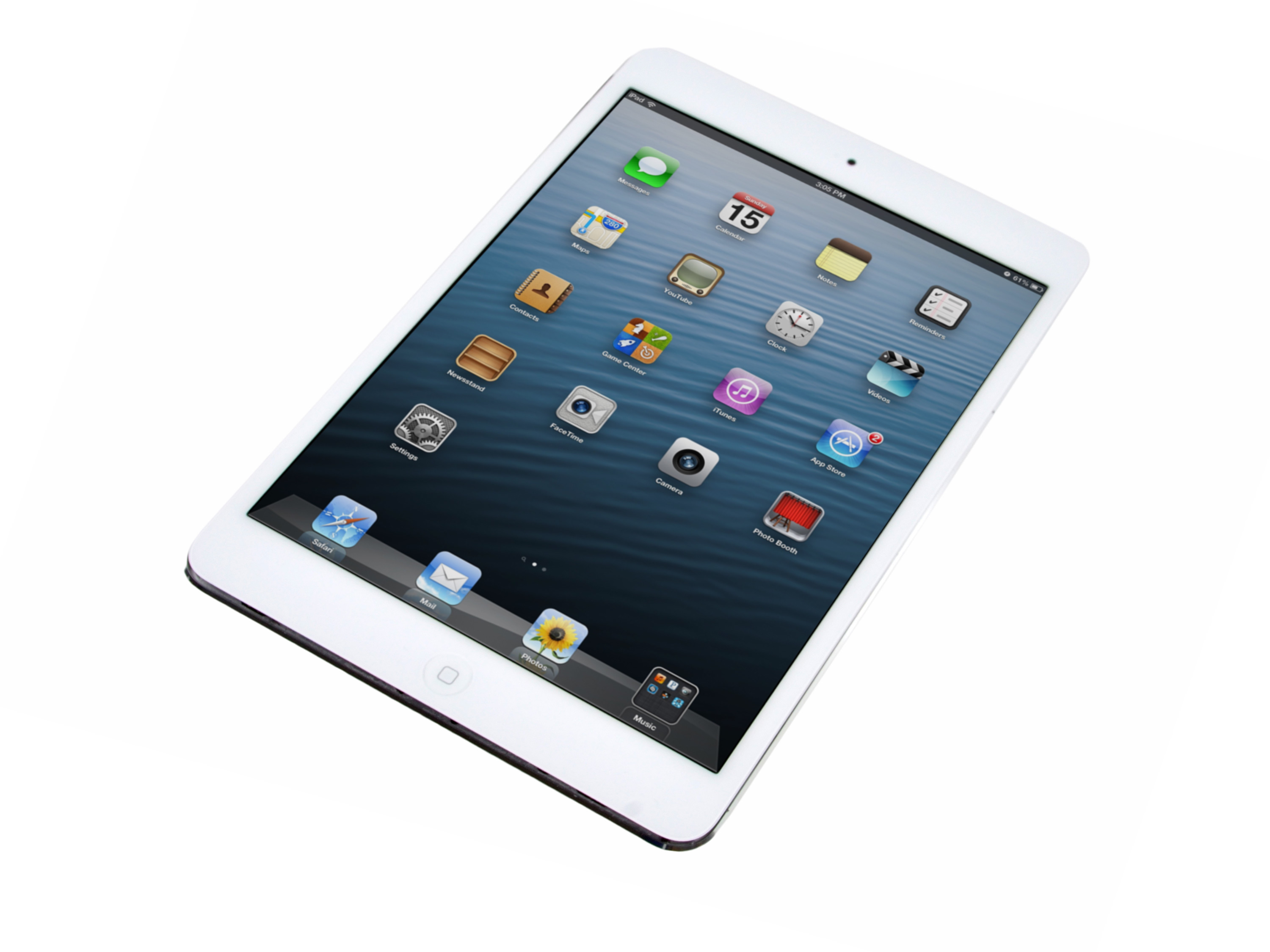
I am always amazed at how dedicated and thoughtful my students are. This year in my Marine Conservation Service Learning class (Co-taught with Tom Schultz, the Director of our Marine Conservation Molecular Facility), we tasked our students with developing a digital textbook for the middle-school kids they were teaching about both local and global marine conservation issues. Well, that book was just published on the iTunes book store – a free download for anyone who has an iPad to use. Details on the book can be found here on my page, and here on the Apple website.

Ashley Yeager from Duke New also posted a story about this on the Duke News website!

Congratulations to Ruthie, Liz, Logan, Hannah and Aaron for the awesome work, and to Tom for his help in editing the text. Can’t wait until this fall when students will add new chapters to this ever-evolving resource for middle-school programs focusing on marine conservation!

The View From Below

New Lab Project: Lesson plan chosen for new book about iPads in classrooms

Heather October 27, 2012 Spinner dolphins, Teaching

About a month ago I got an email from my sister Kaitlin about a call for lesson plan and chapter proposals for an ALA Editions book called Tablet Computers in School Libraries and Classrooms. She is studying Higher Education Administration at Virginia Tech and one of the editors of the book, Heather Moorefield-Lang, a librarian at Tech, had emailed her program with the call for proposals. Kaitlin forwarded the email to me and suggested I submit something.

I contacted Heather Moorefield-Lang explaining my interest in the book. This was right up my alley seeing as the Johnston Lab is no stranger to using iPads and certainly no stranger to using mobile technology in classrooms. In fact I have been the teaching assistant for three courses thus far (two with Dave Johnston) and for all three, students were given iPads, used Cachalot the free digital textbook for the iPad and we have incorporated iPads in everything from reading papers and lab instructions to recording sounds with homemade hydrophones on field trips. We’ve got a few other things going on with mobile technology in the Johnston Lab, like Demi Fox’s work on her Master’s project – an iPhone app called “The Nai’a Guide.”

The book is for a K-12 audience and all lesson plans should be tailored to students somewhere in that range. Although a lot of my experience using iPads in a classroom setting is with undergraduates, I was part of the FEMMES program at Duke, a program for 4th through 6th grade girls, and I relied heavily on the iPad for my lesson on spinner dolphins and sound. I was hooked, now I needed help! And I knew just where to turn.

Every week on Wednesday the “Spinnerettes” as we like to call ourselves, myself and three Master’s students, Demi Fox, Julia Goss and Liza Hoos, all of the people who work on something related to Hawaiian Spinner dolphins meet up with our advisor Dave Johnston to chat about what we’re up to, spinner dolphins, any updates on Hawai’i and most importantly things that we want to work on together. We had been talking about different education and outreach opportunities and I brought this call for proposals to the table and pitched what I knew about it. We didn’t have a lot of time – it was due in two days. They loved the idea and agreed to collaborate on the project.

So we quickly got together a proposal for a lesson on marine mammals and sound using the iPad for a 4th to 6th grade audience. We called it Marine Mammals, Spinners and Spectrograms. We outlined the topics we would cover, some example activities and the iPad apps we would use for each relying heavily on our very own Cachalot. We submitted the lesson plan proposal and found out that we would know by November whether we were chosen for it.

You know how this story ends from the title of this blog post but, Julia, Demi, Liza and I were chosen to write the lesson plan for the book! I got a congratulatory email two days ago saying that our proposal was accepted and that the editors were really excited about our proposal!

We all feel honored to have been chosen and are quite excited about the opportunity to be part of this book. And I know that I’m really looking forward to working with Julia, Demi and Liza on this! We will be getting guidelines and template information soon and then we will get to work.

Stay tuned for updates as we move through the process of creating the lesson plan and getting it published!

Artifacts of learning in marine science and conservation

Dave September 1, 2012 News, Spinner dolphins, Teaching

We recently released a novel website focused on the evolution of science and management of spinner dolphins in Hawaii – the Norris to Now Timeline. The website takes the form of an interactive chronicle of some (clearly not all!) of the scientific, managerial and cultural events that have shaped our understanding of spinner dolphins in this location. The timeline is also set up so that others can contribute to the timeline, opening up the potential for greater community involvement.

Introducing a novel website focused on the evolution of science and management of spinner dolphins in Hawaii – the Norris to Now Timeline
Visit Website

I’m especially excited about the timeline as it represents what educators often refer to as an “artifact of learning.” So often in higher education, students complete a course or program with nothing tangible to show for it. That is not to say that they did not learn some amazing things during their course of study, but rather that these gains may exist only in their individual minds, to be expressed later when they use newly gained knowledge for greater things. In an active learning context, however, it is often desirable to leave behind some evidence of what students have accomplished, and it provides and opportunity to let students tap into their more creative sides.

The Norris to Now timeline is actually an artifact of learning that combines student creativity from two learning events. The first, and by far the most important, is the integrative process that Heather Heenehan conducted as part of her Masters in Coastal Environmental Management program in my lab here at Duke. Her Master’s Project (available online here) was an assessment of what we know and don’t know about spinner dolphins in Hawaii since Norris and his colleagues closed shop in the mid-1990s (hence the ‘Norris to Now’ moniker). It’s remarkable how we’ve lost sight of the population biology and status of this species, when they are seen and interacted with everyday in many places throughout the main Hawaiian Islands. As part of her project, Heather developed a timeline of events that have occurred over time in reference to these animals and this represents the core idea, and content, behind the interactive web-based timeline.

The second event was my recent Marine Mammal Biology, Ecology and Conservation class from Summer Session II (2012) here at the lab. This is a field and laboratory-intensive course designed to provide first-hand experience with research techniques such as photo-identification and mark-recapture analysis, line transect surveys and distance sampling, sampling prey distribution and abundance, behavioral sampling techniques, acoustic recording and analysis, and necropsy techniques. It covers all the main concepts in marine mammal biology and ecology, and often within an applied context. This year, as part of the class, enrolled students were tasked with choosing two events (one scientific, one cultural, managerial and historical) that have shaped the social and scientific construction of spinner dolphins in Hawaii with the primary intent of publishing a web-based educational tool on the web for people to make use of, and hopefully contribute to. The awesome students that contributed to the timeline during Summer Session II are:

  • Sam Arnold
  • Hilary Frandsen
  • Nora Kandler
  • Kyle Karnuta
  • Evelyna Kliassov
  • Georgia Langdon
  • Alexis Levengood
  • Felix Nani
  • Cecilia Passadore Real
  • Sara Schombert
  • Molly Solomon
  • James Wolf
  • Salwa Zahalka
  • Mikolaj Zybala

The system is based on a simple WordPress installation using Molitor’s excellent “Curator” theme, which was designed primarily for art displays – although it is clearly useful for any project that has a strong historical component.

So, if you are interested in the history of spinners in Hawaii, head over to the Norris to Now Timeline, and if you have anything to contribute to the timeline, register at the site and post your event!

Going Digital: Nature.com on new forms of textbooks

Dave May 18, 2012 Cachalot, News, Teaching

There is a great news story on Nature.com today, in their Careers section, that helps describe the evolving landscape of digital textbooks. Nature is in the game big-time, after having released their Principles of Biology textbook, an online and interactive offering that is accessed via a subscription. The author of the article, Roberta Kwok has done a great some great research on the idea of publishing a digital textbook, and in the article she highlights the fact that scientists now have access to set of publishing tools that frees them from having to work through traditional publishing and distribution channels. This is not an easy road as she points out, and requires a certain combination of skills and some dedication. Roberta covers Cachalot in some depth in a Content Box that focuses specifically on self-publishing.

The article is available here.

Ice seals and Cachalot in Spring 2012 Duke Environment

Dave April 17, 2012 Arctic, Cachalot, Climate Variability, harp seals, Ice, News, Teaching

The Spring 2012 issue of Duke Environment Magazine is out, and there are two articles that cover work done in the Johnston Lab.

The first is the lead story in the research section portion of the magazine (called the Log), and is a recap of the work we published early in the year that links changes in sea ice cover with juvenile harp seal mortality in the Northwestern Atlantic. Check it out here. The other is an article for the ‘Personally Speaking’ section of the magazine that describes how we embarked on our Cachalot digital textbook project. You can find it here. You get a PDF of the whole magazine here, and there is even a Flash version available.

It is exciting to get our stuff out in the School magazine. It represents a great opportunity to let the rest of the school know about what we do, and it provides access to our work for a large group of Duke Alumni and other friends of the School that read the magazine. Thanks to Tim Lucas and Scottee Cantrell for getting these things out for us.


Scientists with Stories - Workshops and Small Grants

admin April 17, 2012 News, Teaching

Here’s an update on the Scientists with Stories Project, (SwS) -a collaboration to create intensive training workshops and professional exhibition opportunities for PhD students affiliated with the Duke University Marine Laboratory (DUML) and the UNCʼs Institute of Marine Sciences (IMS).

Applications are now available for the SwS digital media workshop and for small grants for media projects available to students at these institutions. Please note that these are two separate applications. The deadline for both is 11:59 P.M. EST, Monday, May 7, 2012. Decisions will be made by May 15.

For the workshop, we will use a lottery system to determine who may attend. The small grants are open to everyone (individuals or groups), and you do not have to attend the workshop to get a grant. SwS faculty advisors will make the final decision about who will receive grants.

WORKSHOP APPLICATION:
Click here for the workshop application.
If you have any questions about the workshop, e-mail Rachel Gittman at gittman@email.unc.edu.

SMALL GRANTS APPLICATION:
Click here for the small grants application.
If you have any questions about the grants, e-mail Yasmin von Dassow at yasmin.vondassow@duke.edu.

Learning by Doing - Ben Soltoff on Duke beyond Duke

Dave April 17, 2012 Teaching
This is Ben!

My marine megafauna class is again coming to a close. This class is a joy to teach, as we introduce students to many aspects of marine science and conservation through compelling examples of big ocean creatures. Part of the joy of this class comes from the field trips, where we get the opportunity to connect students directly with the ocean and ocean research.

We undertake two trips to do this – one to the Duke Marine Lab to get students out on the water and up-close-and-personal with seabirds, marine mammals and a variety of invertebrates, as well as the estuary and barrier island ecosystem that surrounds the lab. The second trip takes the class to the Sant Ocean Hall at the Smithsonian Natural History Museum, where students get overwhelmed with the fruits of a collective marine science endeavor that spans topics ranging from archeology and evolutionary biology to deep sea exploration and satellite oceanography through wildlife telemetry.

Ben Soltoff is in this class, and he recently wrote a blog post on the Duke Undergraduate Admissions website that covers some of the activities we engage in during the trip to the Marine Lab (as well as other off campus experiences). I think his post is important, primarily because it captures – from the students perspective – how important it is to learn by doing and how Duke excels in this area. Here is an example:

It’s great to learn about things in the classroom, but concepts are much easier to grasp in the field. In lecture, Professor Johnston (better known as Dave) stressed the difficulty of collecting data about marine animals, even large ones, but this wasn’t fully clear to me until we encountered real dolphins near the Marine Lab. Getting a simple head count was almost impossible. A few dolphins would surface briefly, and then a few more would surface on the other side of the boat. Were these the same dolphins? How many were there in total? It was hard to tell.

Ben Soltoff – Duke beyond Duke

I’ve been lucky enough to engage with students like Ben on several courses the seek to get them out into the field. The first was a field course on Marine Conservation Biology that took students to Midway Atoll, the second is my ongoing class on marine mammal biology and conservation during summer session II at Duke Marine Lab and, finally, my marine megafauna course on main campus. All three of these experiences have taught me a lot about teaching, about how every new circumstance is an opportunity to engage, and that field-based teaching provides for a never-ending set of novel situations to inspire students.

I’m really glad that Ben gets it, and that he has taken the opportunity to provide incoming students with some background on the amazing experiences that Duke has to offer. Read his blog here if you missed the link above. Nice work Ben!

Cachalot Presentation to Duke Trustees

Dave March 15, 2012 Antarctica, Cachalot, Teaching

Traveling often means that you miss out on things at home. I really miss my wife and kids while out on research trips, and besides missing my family while on this last set of travels I also missed out on an opportunity to meet with the Duke Board of Trustees to brief them on Cachalot. However, thanks to Tracy Futhey, Vice President for Information Technology and Chief Information Officer at Duke, I was able to be in two places at once and deliver a presentation to the Duke BOT while bobbing around in the Drake Passage with our adventurous Duke Alumni. Tracy was kind enough to bring in two videographers to shoot a short “commercial” for the app to present to the Board while I was leading the Alumni trip. The video includes some demos of the content, provides some details on the latest developments in the app and also includes a brief interview with Sharon Chan, a student who uses the app in my Marine Megafauna class this semester. The video is embedded below, check it out!

Cachalot at Science Online 2012

Dave January 22, 2012 Cachalot, Teaching

I’m just back from the Science Online 2012 conference held at NC State during last Thursday through Saturday and I’ll be the first to admit that I’m worn out. The pace of the conference surpasses any concept of frenetic behavior, and I was amazed at how most of the seasoned ‘Scio’ people could carry on multiple conversations at any given time – using Twitter or email, talking with people and then dropping in the occasional non-verbal cue to someone across the room. These folks left me in the dust.

I got to meet a bunch of fantastic people, and I hope some new colleagues. It was one of the most rewarding conferences I have ever been to actually.

The frenetic pace appears to continue post conference, as they have already posted some videos of certain sessions online – including ours when Adam and I demoed Cachalot. I’m loading it below so you can check it out.

Science Online 2012 - Cachalot and Scientists with Stories

admin December 18, 2011 Cachalot, Huh?, Teaching

Are you interested in using the internet to communicate about your science, or science in general? If so, you should be thinking about getting involved with Science Online conference. While registration is closed now, there is an open wait list.

This will be my first Science Online conference, but I’ve spoken with several people about the experience and I’ve heard nothing but good things – really good things. And from reading what attendees wrote about the last conference, I think I’m going to walk away with a hogshead of new ideas on digital publishing and science communication, both formal and informal.

What’s it all about? Here’s the description from the conference website:

Every January since 2007, the Research Triangle area of North Carolina has hosted scientists, students, educators, physicians, journalists, librarians, bloggers, programmers and others interested in the way the World Wide Web is changing the way science is communicated, taught and done.

ScienceOnline2012 – #scio12 across social media – will take place January 19-21, 2012 on the campus of N.C. State University, with some 450 participants.

As in all the previous years, the meeting will be held in an ‘unconference’ style – the program is built beforehand with the help of participants on the planning wiki, and the sessions are designed to foster conversations and discussions among everyone in the room rather than a traditional one-before-many lecture approach.

The latest schedule is here, and the link with details on the Techno Blitzes is here. The techno blitzes are demos of projects and software. I’m especially interested in seeing the folks that are developing Annotum, an open source scholarly publication platform driven by the wordpress engine.

I’m also excited about the Techno Blitzes because we get to demo Cachalot! The link to our abstract for the blitz is included below. Kudos to Clare Fieseler as well for getting the Scientists with Stories projects onto the docket!

Cachalot: A Scalable, Open Access Digital Textbook for Marine Science

The Digital Sea Monsters Project at Duke University recently developed a digital textbook – called Cachalot – for courses focusing on Marine Megafauna. This textbook integrates the use of text-based, photo, video and audio teaching materials and delivers them to students in a freely downloadable application optimized for the Apple iPad. Cachalot represents a new form of digital textbook, one that is completely open access and populated with current content written by experts in the field. As a textbook, Cachalot sits at the intersection of transformative philosophy (e.g. it is open access and crowd-sourced), pedagogy (e.g. it provides for location independent and just-in-time learning that can fully exploit multimedia) and technology (exploits hand-held devices that integrate computational, communication and visualization capabilities). The app integrates open access journal articles, textbook-style content (including great photos and illustrations), video, audio and animations of animal behavior and anatomy within an annotation interface. Cachalot provides direct access to the experts that contribute to it, and the app incorporates a twitter-based messaging system for students to communicate about course materials. Much of the content in Cachalot is highly accessible to the general public, providing a novel way to educate people about marine science. This application has been developed as a framework, portable to other classes and other purposes.http://superpod.ml.duke.edu/cachalot

Introducing the Scientists with Stories Project!

Dave November 22, 2011 News, Teaching

There is much to be said about initiative, and the Scientists with Stories Project (SwS) is an excellent example of the best kind of initiative in academia – a bottom-up process driven entirely by students, for students.

The Scientists with Stories project is the creation of an enterprising group of graduate students at Duke and UNC. These students identified a gap in their training and successfully raised funds to help address this gap, to the benefit of their entire cohort. It’s a significant gap  - they are seeking training and practice in the use of new communication tools and digital media. Like it or not, these tools are critical for young scientists seeking to address the “broader impacts” requirements of many funding agencies. They are also an increasingly important way for young scholars to promote their science and get their messages out.

I’m lucky enough to be the faculty advisor for the Duke side, John Bruno is my counterpart at UNC. It will be great to work with these driven young scholars and to see what shakes out. The proposal was funded by the Kenan-Biddle Partnership, a program that supports projects that enhance the intellectual life at both Duke and the University of North Carolina at Chapel Hill by strengthening established links or encouraging new collaborations. The Nicholas School ran a brief story on the project today.

Below is the executive summary of the funded proposal to best explain how the SwS project will do this.

[framed_box bgColor="#ffffe4" rounded="true"]

The Scientists with Stories Project: a media training collaboration at the coastal laboratories of Duke & UNC-Chapel Hill

Executive Summary

Science communication is an increasingly important component of the broader impact of scientific research projects — and the grants that fund them. Most science curricula at the PhD level lack any programs to help young scientists develop the skills needed to communicate via newly dominant mediums of communication: digital photography, web videography, podcasts, and blogging. The PhD students affiliated with Dukeʼs and UNCʼs coastal laboratories experience extra challenges when seeking to acquire media skills outside of their academic curriculum. Geographic isolation prohibits these students from utilizing main campus resources, including media-relevant courses, media equipment loans, and interaction with faculty at Dukeʼs Center for Documentary Studies (CDS) and UNCʼs School of Journalism and Mass Communication (SJMC). Our end goal is to foster the notion that the process of scientific inquiry is, essentially, a story. To this end, we must work across campuses to transform the next generation of young scientists into storytellers. This proposed collaboration creates an intensive training workshop and professional exhibition opportunities for PhD students affiliated with the Duke University Marine Laboratory (DUML) and the UNCʼs Institute of Marine Sciences (IMS). The program leverages existing institutional and student assets, such as connections with workshop instructors, student and faculty blogging platforms, optimal training spaces, video-link systems, and student-ready media equipment. The January-through-December program model caters to those PhD students committed to producing a polished media product. Most marine science students can design their media projects around summer fieldwork, which will be bookended by training, exhibition events, and support meetings during the spring and fall semesters. The Scientists with Stories (SwS) project idea was developed in September 2011 during a recently revived inter-laboratory student symposium convening DUKE/UNC students. This proposed initiative is designed to build off of our common search for outreach skills and a renewed enthusiasm for increased collaboration between the two university laboratories in Carteret County. [/framed_box]

Cachalot iPad application in the News again!

Dave November 13, 2011 News, Teaching

This morning I did an interview with Brittany Edney from Time Warner Cable’s News 14 – a 24 hour cable news channel that services all of North Carolina. Brittany was really interested in the motivation behind developing the Cachalot digital textbook app and how we managed to deliver it at it’s extremely compelling price-point (free!). She was curious about the many things we had to juggle when designing and developing the immersive experience it provides.

It was especially great to get Duke Junior Emilie Franke (who is currently enrolled in my Marine Conservation and Community Outreach class) to test drive the application in real-time during the interview and provide some immediate feedback on it’s utility for annotating class materials and it’s ease of use. Thanks Emilie!

Brittany successfully pitched the story to her editors in the Raliegh/Durham area, so they are airing it for our Duke family up on main campus and I think it is being broadcast state-wide. If you are local and want to see it on air, tune to channel 14 on Time Warner Cable – it should be playing repeatedly on the half hour for the next day or so. Otherwise, grab it here, online. Embedded below!

Thanks again to all of our expert contributors to the project, and to our content partners the National Geographic CRITTERCAM project, the WHOI CSI lab and the Society for Marine Mammalogy.

Cachalot on Eyewitness News - WCNT 9

Dave November 4, 2011 Teaching

It was a rainy day in Beaufort today, and what better way to pass the time than doing an interview on our Cachalot app for the local CBS station – Channel 9 WNCT, Eyewitness News. I got to spend an hour or so with Sasha Horne, one of their traveling news reporters, and give her the lowdown on Cachalot.

They aired the story tonight on the 5:00pm news, you can get the video and their text coverage at this URL: http://www2.wnct.com/news/2011/nov/04/3/professor-uses-technology-connect-students-marine–ar-1575603/

I’ve embedded the video of the interview below.

Onward!

Cachalot and teaching innovation at Duke

Dave September 25, 2011 News, Teaching

This weekend was homecoming at Duke, and the place was crawling with alums, young and old. Some were back for football, others to see old friends, and a special group of alumni were back to catch up on what is new and exciting at Duke – so that they can spread details back within their networks at home. These are the folks who come to participate in the Duke Alumni Leadership weekend, and it was my great pleasure to meet some of them and tell them all about our new iPad app – Cachalot.

About 65 people signed up for a session on Teaching Innovation at Duke. This session was essentially a panel discussion designed to provide an overview of how Duke is changing the landscape of university teaching, and they got an excellent overview of several interesting developments.

The panelists were:

  • Dr. Mohamed Noor – Professor of Biology
  • Dr. Cary Moskovitz – Assistant Professor of the Practice in Writing and Director, Writing in the Disciplines
  • Dr. David Johnston – Research Scientist, Duke Marine Lab
  • Dr. Lynne O’Brien – Director of Academic Technology and Instructional Services for Perkins Library at Duke University
  • Ann Prybylowski – undergrad student of Dr. Noor

The panel discussion was moderated by esteemed alumni volunteer, Forever Duke Award winner, DAA Executive Board Member, and parent of 3 Duke students – Julie Ferguson.

It was a great meeting. Dr Noor provided details on how he has revamped one of the intro biology courses, and Dr Moscovitz provided an excellent overview of the Duke Reader program. Ann Prybylowski attested to the quality of Dr. Boors revamp. Lynne O’Brien gave the roundup and provided a great overview of the five areas of teaching innovation at Duke: open access, multimedia, mobility, active learning and new technology. Lots of fantastic discussion about the future of teaching and how can technology assist followed. Questions addressed included:

  • Do today’s students, as plugged into technology as they are, really process information differently?
  • What do you see in the future of learning in the classroom?
  • What motivates faculty to adopt new technologies in their teaching?
  • What if students don’t have the latest technology? How can they participate in these new teaching and learning strategies?

I got to talk a bit about digital textbooks and costs incurred by students, and focused some discussion about students using smartphones and tablets in class spontaneously, e.g. to augment ongoing discussions etc. In terms of our Cachalot app, I was really happy to talk more about creating customized textbooks for specialized courses and how we’ve used iPads in teaching down here at the Marine Lab. People really enjoyed the cachalot demo, and I think we’ll see a few more downloads after this!

Thanks to Jennifer Copeland at the Duke Alumni Association for coordinating the event.

The link to details on the event are here.

Busy spring break!

Dave March 11, 2011 Arctic, harp seals, Ice, News, Oceanography, Teaching

Spring break at Duke is pretty much over, and it has been a busy time. Without classes to teach and with most of our research group at the Bio-logging conference in Hobart, Tasmania, it has been a great time to get some writing done. This week we polished off two papers on sea ice and seals in the North Atlantic, one of which is now submitted to the primary literature. The second will go in early next week.

Amidst this productivity, we also found out that Ari was awarded a National Geographic award for Dtagging blue whales and humpback whales in California, which will support some of Julia Burrows dissertation work.

Finally, we’ve also made great progress in the Digital Sea Monsters project this week, thanks to the programming team. With fewer distractions, we’ve been able to work out a significant number of bugs in the public portion of the app. Check out the layout on the Laysan albatross entry below…

[image title="Megafauna App: Laysan Albatross" size="large" align="center" icon="zoom" lightbox="true" autoHeight="true"]http://superpod.ml.duke.edu/johnston/files/2011/03/laysan_entry.jpg[/image]

Digital Sea Monsters Project

Dave January 31, 2011 Huh?, News, Teaching

For the past year or so we have been slowly redeveloping the content of our Marine Megafauna course for mobile devices. More and more, we see students using their phones and tablets to access information in and out of class, and my colleagues and I at DUML are working towards the creation of a application for mobile devices that will integrate course content for access on iPhones, iPads and other mobile devices.

We now have 4 student programmers working on a native iOS application, and we have set up a website to document our progress – we’re calling it Digital Sea Monsters.

  • Search

  • Tags

    Alaska Antarctica Arctic Cachalot Citizen Science Climate Variability Fin whales Gray seals harp seals Huh? Humpback whales Ice Long Eddy News Oceanography Spinner dolphins Teaching
    • The Johnston Lab

      • 135 Duke Marine Lab Rd., Beaufort, NC
      • david.johnston@duke.edu
      • 252 504 7593
      • 252 646 1007
      • 252 504 7648
    • Get Connected

      emailfacebooktwitter
    • Search

    • Recent Musings

      • Humpback whale research in Southeast Alaska
      • The Mega MOOC: Taking Marine Megafauna online in Spring 2014!
      • Marine Conservation Service Learning Students = Awesome Authors on the iTunes Store
      • “Holy Humpback” of a Day!
      • Bronx, the Cape Cod seal, and his spatial habits: a 5-month checkup
      • Spinner article in Natural History magazine!
      • Palmer Long-term Ecological Research Program: Rise of the Megafauna
    • RSS Digital Sea Monsters

      • Cachalot 1.1 is available!
      • Cachalot is Live!
      • Great News!
    • Cachalot iPad App

      Cachalot on iTunes

    • Twitter Feed

      Follow @dioptrica

    • Our Group:

      MCE@D


      DUML

    • About
    • Location
    • Research
    • Teaching
    • Tech
    Copyright © 2013 Johnston Lab. All Rights Reserved