Johnston Lab
Habitat, Climate and Marine Wilderness
  • email
  • facebook
  • twitter
  • About
    • Students
  • Research
  • Teaching
  • Tech
    • InTeam Project
    • Apps
    • Video
  • Weblog
Select Page ...

Category: harp seals

Ice seals and Cachalot in Spring 2012 Duke Environment

Dave April 17, 2012 Arctic, Cachalot, Climate Variability, harp seals, Ice, News, Teaching

The Spring 2012 issue of Duke Environment Magazine is out, and there are two articles that cover work done in the Johnston Lab.

The first is the lead story in the research section portion of the magazine (called the Log), and is a recap of the work we published early in the year that links changes in sea ice cover with juvenile harp seal mortality in the Northwestern Atlantic. Check it out here. The other is an article for the ‘Personally Speaking’ section of the magazine that describes how we embarked on our Cachalot digital textbook project. You can find it here. You get a PDF of the whole magazine here, and there is even a Flash version available.

It is exciting to get our stuff out in the School magazine. It represents a great opportunity to let the rest of the school know about what we do, and it provides access to our work for a large group of Duke Alumni and other friends of the School that read the magazine. Thanks to Tim Lucas and Scottee Cantrell for getting these things out for us.


Harp seals and ice featured on NSIDC website

Dave March 14, 2012 Arctic, harp seals, Ice

Another brief update as I recover from my last trip. While traveling I was contacted by Dr. Julienne Stroeve from the U.S. National Snow and Ice Data Center in Boulder, CO. Julienne had picked up on our recent paper on sea ice, climate change and harp seals in PLoS ONE and was interested in including some of the information from the paper in their online news section. Great to see NSIDC pick up on the story – we used their data!

Here’s a link to the story: http://nsidc.org/arcticseaicenews/2012/03/february-ice-extent-low-in-the-barents-sea-high-in-the-bering-sea-2/


Harp seals and ice: Media and hype

Dave January 17, 2012 Arctic, Cachalot, Climate Variability, harp seals, Ice, News

It’s been 13 days since our paper about changing sea ice conditions in breeding regions of harp seals was published in PLoS ONE. It has been incredibly interesting to watch the story propagate through the worlds media channels, both traditional and online. As a scientist, I’m increasingly interested in how science is portrayed to the general public and how they access the information. In this context, I think it is becoming more and more important for scientists to be advocates for good science, especially their own.

We have a great media team at the Nicholas School, and Tim Lucas (Director of Marketing Communications) has been tracking how our story was covered in these various news channels. He has provided me with an update on some of these numbers that I’d like to share with anyone who is interested, to illustrate how widely distributed the release of our paper was. I did a bunch of media interviews for these stories, and many of those who interviewed me also interviewed other researchers who study harp seals. In general, I think the initial coverage was quite good, accurately reflecting our conclusions. Here is a summary of the coverage (thanks again to Tim Lucas for rounding this stuff up):

SELECTED MAJOR MEDIA:

  • The New York Times 1/5/2012
  • BBC News 1/5/2012 (distributed worldwide)
  • Canadian Press 1/5/2012 (distributed nationwide)
  • Postmedia News 1/4/2012 (distributed nationwide)
  • Ottawa Citizen 1/5/2012
  • Agence France-Presse 1/4/2012 (distributed worldwide)
  • The Guardian 1/5/2012
  • CBC News 1/5/2012 (distributed nationwide)
  • Huffington Post 1/4/2012
  • Sydney Morning Herald 1/7/2012 (distributed nationwide)
  • Scientific American 1/5/2012
  • Yahoo News 1/4/2012
  • Int’l Business News 1/5/2012 (distributed worldwide)
  • National Geographic News 1/6/2012
  • Decoded Science 1/9/2012
  • Environmental News Network 1/9/2012 (distributed worldwide)
  • Switchboard/NRDC 1/9/2012
  • Mongabay.com 1/11/2012
A number of newspapers and other media outlets ran stories based on the major new sources listed above. Tim was able to parse a lot of information out of the news stream to give us a pretty good idea of how many stories were run:
We are able to track 551 placements worldwide using free Google, Yahoo and Nexus/Lexus basic and advanced search engines. Of these, most have been in international print or online media outlets, with the AFP, BBC and Postmedia stories getting the broadest distribution. Heaviest coverage was, predictably, in Canada and, more generally, North America and Europe, but stories also showed up in Tehran, Jakarta, Buenos Aires, Sydney, Auckland, India and other far-flung cities and geographic regions.
It is much harder to determine how frequently the story was covered by non-major online news portals and other social media channels. Tim did some sleuthing about and this is what he came up with:
Using keyword searches conducted on Google and Yahoo search engines, I am able to tell you that on Friday, Jan. 6, there were about 40,500 items that showed up when I searched for “Duke University”/harp seals.  On Friday, Jan. 13, there were 41,300. Searching for “Duke”/harp seals, I found 67,000 or so items on 1/6, and about 83,000 individual searchable items on 1/13. These numbers SUGGEST that a sizeable number of people have blogged about it, linked to it on their websites or Facebook pages, or tweeted or re-tweeted it.  I have no means of actually analyzing these numbers with any accuracy, so all I can say for sure is:  It got noticed by a lot of people.

This is pretty amazing coverage. Clearly a small portion of the information returned by these searches pertains to some of our previous work, but those papers were never covered in the media the way this one was.

It is also really interesting to see how the story morphed over time, with headlines and content shifting away from the results of the study to more editorialized content, often mixed with other stories about climate change or natural resource management. In particular many of the later stories ending up linking climate change with observed declines in the abundance of harp seals, which is something that we did not demonstrate in the study – that’s hype. Simply put – Harp seals are not endangered, and only time will tell if current conditions will contribute to major declines in their overall numbers. Here is Tim’s take on this hype:

If you go back and read the major media coverage, the first ones tended to hew pretty closely to the original news release and peer-reviewed paper. In other words, they more or less got the science right and reached reasonable conclusions.

By two or three days after the paper’s release, however, we see spin beginning to occur, and find that much of the second-generation of coverage is beginning to become more opinionated, editorialized or inaccurate.

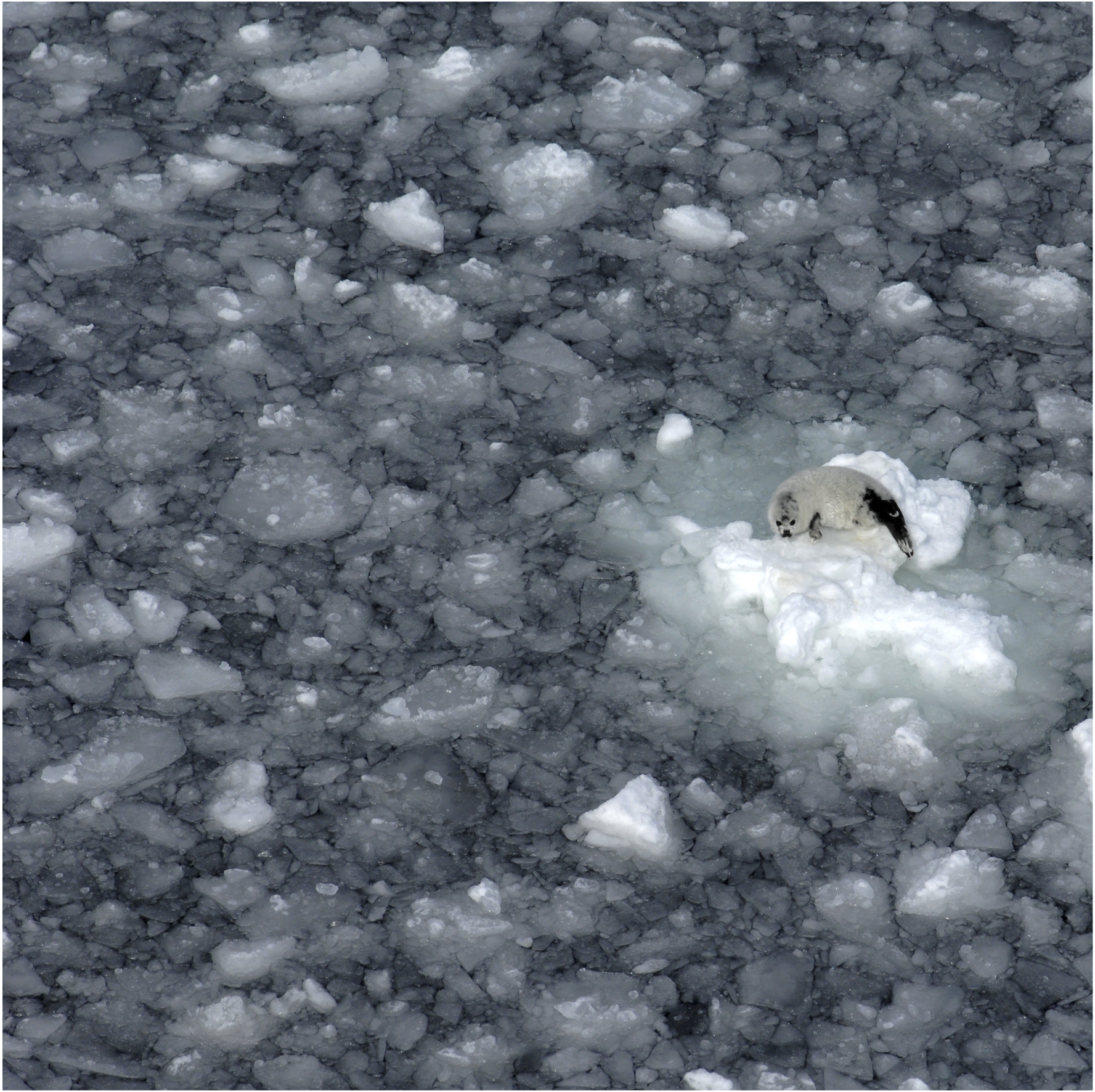
In an interview for the Fisheries Broadcast on CBC Radio Newfoundland, I was asked by the host Brian Callahan about the source of people’s interest in this study, and what would drive such an incredible media barrage. Honestly, I believe that people are generally concerned about climate change, and that stories that link climate change to obvious environmental phenomena (like declining sea ice) and charismatic megafauna (like seal pups – check the article feature picture above) are the killer combination in terms of rapid social radiation and amplification of a story. The final, and perhaps most important part of the puzzle is open access publishing itself. Not only are people concerned about the changing climate, and tend to focus on lovable animals, but they had immediate access to the information. The paper is accessible to everyone via the PLoS ONE website – no subscriptions, no logins, no charges – free for everyone, everywhere.

I think the fact that the story was covered by Gizmodo (a popular technology weblog about consumer electronics) pretty much says it all. While the story in Gizmodo has some issues in terms of properly describing the reproductive biology of harp seals, I laughed aloud when I read the first few lines:

Harp seals use sea ice as their chilly love nests, and after the lovin’ leads to babies, parents nurse for just 12 days before the pups are on their own. 

I can only hope that Gizmodo will cover the second version of our new digital textbook for marine science – Cachalot – with similar flair!

Harp seals on thin ice...

Dave January 4, 2012 Climate Variability, harp seals, Ice, News

Today we published a paper on the effects of climate change on pagophilic seals in the North Atlantic in the open access journal PLoS ONE. The paper is available to everyone, free of charge here: http://dx.plos.org/10.1371/journal.pone.0029158

This paper is the third in a series of studies published by my lab that examine the effects of climate variability and longer-term climate change on the habitats of ice breeding seals in the North Atlantic (See Johnston et al. 2005 and Friedlaender et al 2010). These seals, especially harp and hooded seals that pup on seasonal sea ice in sub-Arctic regions, are not well studied in the context of climate change even though their breeding habitats may be extremely vulnerable to warming.

This latest paper focuses specifically on harp seals – Pagophilus groenlandicus – and sea ice cover in their predictable breeding grounds during February and March. Harp seals are found only in the North Atlantic, and are probably the most abundant phocid seal that inhabits this ocean basin. This species has been hunted for subsistence or commercial purposes for decades across the North Atlantic, and in many places these hunts continue. The species whitecoat pups are, well, iconic.

The results presented in our new paper clearly indicate that light ice conditions lead to increased neonatal mortality in harp seals. Sometimes the mortality is dramatic, where entire year classes might have been lost. Increased mortality in turn leads to reduced recruitment of seals into the breeding population a few years down the road. Harp seals are well-adapted to the ephemeral nature of sea ice during the spring, and the occasional bad ice year should pose no problem for a pinniped species that can reproduce relatively quickly. To put it bluntly, occasional and periodic bad ice years, and subsequent reduced or missing year classes, should not overly effect the population’s trajectory over the long term, especially in the absence of other dramatic sources of natural mortality. What worries me, and other scientists who study this species, is what might happen if light ice years become the norm, and reproductive failure becomes commonplace. Remember that we need to top this off with other significant sources of human-caused mortality  - such as bycatch and hunts.


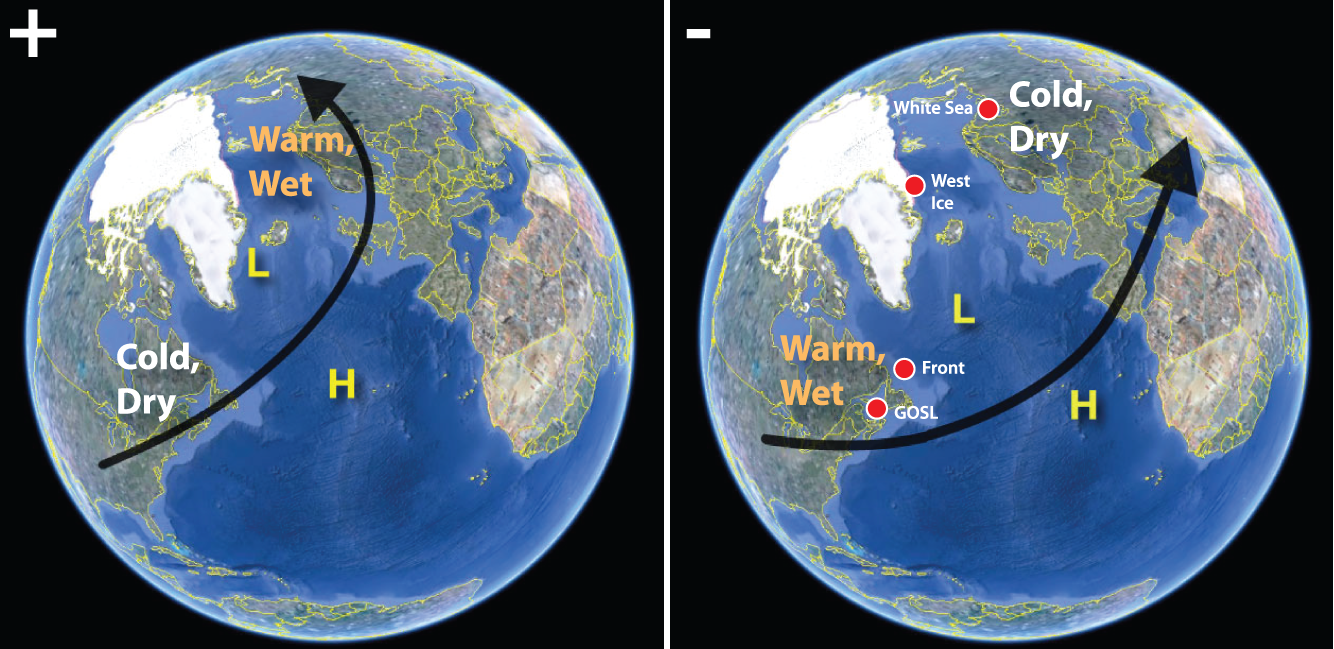
Our latest paper also documents the declining ice conditions in harp seal breeding regions across the North Atlantic over the past 32 years. Much of this change may have not been completely obvious, as shorter term variations in climate (driven by factors like the North Atlantic Oscillation) can obscure the longer term warming signal. But it’s in there – and the results of our work indicate that sea ice is declining in harp seal breeding regions at about 6% per decade – a rate that easily keeps pace with, or exceeds – the observed changes in sea ice cover for the Arctic overall. Our research, and that of others who study ice dynamics at high latitudes (e.g. NSIDC graph at left) reveals that light ice years are indeed becoming the norm.

Put these two things together – (1) high neonatal mortalities in light ice years and (2) a long term decline in ice cover in predictable breeding habitats and you have a recipe for population disaster, even for an abundant species. What remains unclear is how the animals may respond to changing ice conditions. Clearly, harp seals are not responding immediately to declines in sea ice cover – if they did, we wouldn’t see increased neonatal mortality across strings of light ice years, they would simply have moved on to colder (?) pastures. Our retrospective analysis in the present paper hints at limits to harp seal reproductive flexibility, as their populations appear to fluctuate in synchrony with NAO (and therefore sea ice) conditions over time. Indeed, the reproductive timing of harp seals is driven by the complex relationship amongst body condition, light levels (as a proxy for time of year and latitude) and predictable appropriate sea ice habitats, and these factors may constrain rapid acclimation to new conditions. Perhaps there is enough flexibility in the reproductive biology of harp seals to capitalize on new ice habitats that can support their reproductive needs over the long term. This is an avenue of research we are exploring as we continue our studies of climate change and it’s implications for ice breeding seals.

Quoted in ScienceNOW: Harp seals and ice

Dave December 6, 2011 Arctic, harp seals, Ice

I did an interview a couple of weeks ago for a journalist that was covering a new paper on changing sea ice in the Northwest Atlantic and it’s potential effects on harp seals. The ScienceNOW piece, written by student journalist Erin Loury was released on 30 November 2011. The story can be found here: http://news.sciencemag.org/sciencenow/2011/11/baby-seals-need-the-nicest-ice.html

It was really great to get to talk to Erin about the paper, and in particular to provide some context for changing ice conditions across the Northwest Atlantic in relation to harp seal breeding regions. Perhaps most importantly, it is really great to see that the Canadian Department of Fisheries and Oceans (DFO) is starting to take climate change seriously when it comes to ice seals in Canada. This is the first paper that that DFO has published specifically on this issue, and it is a welcome deviation from the standard “seals eat fish” studies that dominate their work. Erin contacted me about this paper as our research group here at Duke has been studying sea ice change in harp seal breeding regions since 2003 or so. We published the first assessment of sea ice cover and climate variability in breeding regions of harp seals in Canada in 2005, and followed this up with a basin-scale assessment in 2010. We’ve got more on the way for this topic – so stay tuned!

This latest paper  - entitled “Drifting away: implications of changes in ice conditions for a pack-ice-breeding phocid, the harp seal (Pagophilus groenlandicus)” was published in the Canadian Journal of Zoology. It’s findings confirm previous studies that illustrate worsening ice conditions in eastern Canada and provides us with a much needed piece of the dynamic puzzle of sea ice and seals in Canada – it sheds light on the types of ice that harp seals have preferred to pup on in the past. This information can be very useful for future studies of how changes in sea ice quality and quantity in this region are affecting harp seal neonatal survival. Congratulations to Mike Hammil and his coauthors on getting this paper out!

You can find this paper on the CJZ website here: http://www.nrcresearchpress.com/doi/abs/10.1139/z11-081

Abstracts for Upcoming Conference on the Biology of Marine Mammals

Dave October 2, 2011 Antarctica, Arctic, Climate Variability, harp seals, News, Spinner dolphins

Our lab has several abstracts accepted for presentation at the upcoming 19th Biennial Conference on the Biology of Marine Mammals. The conference is being held in Tampa, FL during November 28 to December 2, 2011. The theme of the conference is: “Cumulative effects of threats to marine mammals: Challenges to animals, scientists, and managers.” The following are the abstracts that have been accepted for poster or spoken presentations by Johnston Lab members and collaborators:

[framed_box bgColor="#b8eeff" rounded="true"]

Predators, ice and krill: Fine-scale ecological gradients in an enclosed embayment on the Western Antarctic Peninsula

Johnston, David W., A.S. Friedlaender, E.L Hazen and D.P. Nowacek

Sea ice is the dominant habit factor influencing the distribution, abundance and behavior of marine predators and their prey in the Antarctic ecosystem. The relationships amongst sea ice quantity and quality and marine predators have been explored at broad spatial scales, but few studies have attempted to explore them at fine scales (< 10km). It is at fine scales that many of the effects of climate change are playing out, as sea ice cover declines and marine predators react to changes in ice habitats and the distribution and availability of their primary prey, Antarctic krill. Here we present links between marine predators, krill and sea ice in an embayment on the Western Antarctic Peninsula during May, 2010. Vessel-based strip transects (counting pinnipeds and cetaceans) were conducted within Wilhelmina Bay, on transects along and across the axis of the bay, with synoptic ice cover estimation and EK60 echosounder prey surveys. These data revealed fine scale gradients in the presence of humpback whales, crabeater seals and Antarctic fur seals in relation to changes in sea ice cover and krill density. Contingency table analyses indicated that humpback whales were negatively correlated with increasing sea ice cover, and were excluded from deeper portions of the bay. Crabeater seals were found only in these deeper portions of the bay and Antarctic fur seals were found throughout, with greater numbers at mid to high ice concentrations. Multiple linear regressions of species counts and krill density in three portions of the water column revealed that only Antarctic fur seals were significantly correlated with krill in the upper water column. Humpback whales were most correlated with krill in the deeper portions of the water column, and crabeater seals negatively correlated with krill in near surface waters. These results shed light on the combinations of sea ice cover and prey presence that structure predator/prey relationships at fine scales. [/framed_box]

[framed_box bgColor="#d8ffdd" rounded="true"]

Quantifying the efficacy of a spatio-temporal management intervention on human-dolphin interactions in Hawai’i

Tyne, Julian, David W. Johnston, Ken Pollock, Kim New, and Lars Bejder

Since the 1980’s, concerns have been raised about the extent of water-based tourism targeting spinner dolphins (Stenella longirostris) in their resting habitat off Big Island of Hawai’i. In 2010, spinner dolphins associated with the Big Island were defined as a unique stock and were also identified as one of the most vulnerable to anthropogenic disturbance. The National Oceanic and Atmospheric Administration is currently considering a management intervention to reduce the number and intensity of human-dolphin interactions by implement time-area closures in critical habitat. To measure the effectiveness of this mitigation approach a Before-After-Control-Impact (BACI) design is being employed to asses the local abundance, distribution and behaviour of spinner dolphins in four resting bays before and after the implementation of time-area closures. Systematic boat-based photographic identification surveys have been carried out continuously over the past year following Pollock’s Robust Design (Primary period: each month; Secondary Period: 2-4 consecutive days in each of the four bays). Of the 96 surveys undertaken over 850 hours, spinner dolphins were observed on 43 (45%) occasions with group sizes ranging from 6 to approximately 250 dolphins. Preliminary abundance estimates over five primary periods ranged between 205 (SE ± 18; 95% CI = 176 – 249) and 446 (SE ± 73; 95% CI=329 – 621) spinner dolphins frequenting the study area. The precision of these preliminary abundance estimates will be tested over the next 3 to 5 years of continued data collection. In addition, passive acoustic loggers have been deployed in each bay, recording 30 seconds every 4 minutes with data collected continuously. These acoustic data allow for cross-validation with photographic survey records, and the method of deployment will provide an index of the regularity of dolphin presence in each bay before and after the implementation of time-area closures.

[/framed_box]

[framed_box bgColor="#d8ffdd" rounded="true"]

What is the resource, Resting Bays or Dolphins? Application of Common Pool Resource Theory to Spinner Dolphin (Stenella longirostris) Related Tourism on the Island of Hawai‘i

Heenehan, Heather, David W. Johnston, Xavier Basurto and Lars Bejder

Cetacean tourism is an expanding sector and has grown significantly in the past 15 years in the state of Hawai‘i.  On the Island of Hawai‘i one form of cetacean tourism depends heavily on spinner dolphins in  resting bays along the Kona coastline. Spinner dolphins move predictably into shallow bays for rest during the day and move offshore to feed at night.  In addition to swim-with and vessel-based spinner dolphin excursions, there are other users and user groups that depend on these bays for social, recreational and subsistence purposes including snorkel companies, fishermen, surfers, kayakers and spinner dolphins themselves.  Growing conflicts amongst these user groups are evident, and an integrated and comprehensive management approach is needed. For management purposes, these bays should be considered a common pool resource; it is difficult to exclude users from the resource and the resource exhibits high subtractability – meaning that one user’s use of the resource takes away the use of that resource from another user.  Previous examinations of this situation have identified spinner dolphins as the resource requiring management. This approach however, focuses on a single species and ignores other users that interact negatively with dolphins as a by-product of their activities. Here we argue that establishing the spinner dolphin resting bay as the common pool resource is more appropriate and far more useful. This method could be considered a true ecosystem-based approach that integrates the needs of all stakeholders and explicitly acknowledges the legal rights to the use of these habitats by spinner dolphins as established by the U.S. Marine Mammal Protection Act. This approach is also useful for assessing variability in the social construction of individual bays and can help inform the development and roll-out of one-rule-fits-all management schemes currently under consideration by management authorities.

[/framed_box]

[framed_box bgColor="#d8ffdd" rounded="true"]

Abundance and movements of spinner dolphins off the main Hawaiian Islands

Hill, Marie C., Amanda L. Bradford, Kim R. Andrews, Robin W. Baird, Mark H. Deakos, Sabre D. Mahaffy, Aliza J. Milette, Erin M. Oleson, Jan Östman-Lind, Adam Pack, Susan H. Rickards, Suzanne Yin, and David W. Johnston.

Spinner dolphins in Hawaiian waters were recently redefined from one stock spanning the Hawaiian EEZ into six, including three within the main Hawaiian Islands (Ni‘ihau/Kaua‘i, O‘ahu /4-Islands, Hawai‘i Island). Photo-identification data, contributed to the Pacific Islands Photo-Identification Network, were used to calculate minimum abundance estimates for main island stocks and to analyze intra- and inter-island movements of individuals. The data include sightings from seven of the main islands (all except Moloka‘i) and span 2001-2009. The photographic catalog consists of 673 individuals, with island catalogs ranging from 11 to 215 individuals (median=49). Mark-recapture analyses produced six closed capture estimates of minimum seasonal abundance for leeward portions of Kaua‘i – 559 (CV=0.19) in Oct-Nov 2005; O‘ahu – 149 (CV=0.12) in Jun-Jul 2002 and 330 (CV=0.05) in Jul-Sep 2007; and Hawai‘i Island – 733 (CV=0.15) in May-Jul 2003, 260 (CV=0.20) in Jan-Mar 2005, and 190 (CV=0.15) in Jan-Mar 2006. Although negatively biased due to unmodeled survey effort variability and individual heterogeneity, the estimates suggest inter-island variation in abundance and seasonal variation in dolphin numbers along leeward coasts. Movement analyses quantified individual travel distances and rates at all islands and site fidelity (using standard distance deviations) and diffusion rates at O‘ahu and Hawai‘i Island. Findings indicate that 1) inter-island movements are infrequent, particularly between stocks; 2) observed travel distances and rates vary by island; 3) O‘ahu individuals exhibit higher site fidelity (lower mean standard distance deviations) than Hawai‘i Island individuals; and 4) diffusion rates differ between O‘ahu and Hawai‘i Island on daily timescales, but are less differentiated over timescales of weeks to years. Results from the movement analyses could be used to assess the potential for new stock divisions. Overall, this study demonstrates the value of using collaborative photo-identification data to explore the complex and variable population characteristics of spinner dolphins in the main Hawaiian Islands.

[/framed_box]

[framed_box rounded="true"]

An Analysis of an Environmental and Biological Factor Affecting Stranded and By-Caught Harp Seals (Pagophilus groenlandicus) in the Northwest Atlantic.

Kiester, Brianne, Kristina Cammen, Tom Schultz and David W. Johnston

We are currently witnessing significant climate changes in high latitude ecosystems including many areas of the Arctic. Many high latitude species, like harp seals (Pagophilus groenlandicus), will be affected by changing sea ice conditions, and their populations forced to adapt to changing habitats. The genetic makeup of the species, often measured as overall fitness and genetic diversity, will affect how quickly they can adapt to these changing climates. This study analyzed two factors that are likely to affect harp seals along the eastern coast of the United States: ice cover (environmental) and genetic fitness (biological). Ice cover assessments were conducted for the month of February in the Gulf of St. Lawrence whelping region from 1991-2010 using remote sensing data. Microsatellite makers were used to determine d2 as a proxy for fitness in stranded individuals and healthy (by-caught) animals. We found a strong negative correlation (r2=0.49) between ice cover in the Gulf of St. Lawerence and strandings, indicating that light ice conditions in harp seal whelping patches contribute to higher stranding rates of harp seals along the east coast of the U.S. We also found no significant difference in fitness (d²) between stranded and healthy harp seals, and that the overall fitness of the population is high. The results demonstrate that increases in stranded seals during light ice years are not the product of reduced fitness, and that changes in sea ice cover are having a greater affect on the population than differences in fitness. Any changes in either of these factors could have major implications for the population and its ability to adapt. Harp seals are an indicator species for changing high latitude ecosystems and it is important for managers to account for all factors affecting the species and understand how these factors affect them across the North Atlantic.

[/framed_box]

[framed_box rounded="true"]

Trends in sea ice cover across the North Atlantic: Implications for harp and hooded seals

Young, T J, David W. Johnston, Matthew T. Bowers, Ari S. Friedlaender and  David M. Lavigne.

Ongoing changes in ice conditions pose significant challenges for harp and hooded seals, which use sea ice as a platform on which to give birth and nurse their pups. It is known that sea ice dynamics in harp and hooded seal breeding locations are governed largely by the phase and amplitude of the North Atlantic Oscillation (NAO). In this study, we examined the coupled relationship between the NAO and satellite-derived measures of sea ice cover during February and March 1979 – 2011 in areas where harp and/or hooded seals traditionally reproduce. We confirmed a consistent positive correlation between the NAO Index and annual sea ice in the regions located in the Northwest Atlantic off eastern Canada. However, sea ice cover in the White Sea harp seal region between Norway and Russia was negatively correlated with the NAO, and the West Ice region off eastern Greenland showed a consistent decline across the entire time series that is indicative of longer-term climate change. A mixed effects linear regression analysis of sea ice cover in the same breeding regions revealed a significant annual decline in sea ice cover across the entire North Atlantic, regardless of regional NAO effects. These results indicate that both short-term and longer-term climate variability are affecting the breeding regions of harp and hooded seals. Management strategies for these and other ice-breeding seals should account for local climate effects and larger-scale climate trends. This is especially important for the West Ice stock of hooded seals, which has decreased in number by up to 90% over the last 50 years and was listed as “vulnerable” by the IUCN in 2008.

[/framed_box]


Busy spring break!

Dave March 11, 2011 Arctic, harp seals, Ice, News, Oceanography, Teaching

Spring break at Duke is pretty much over, and it has been a busy time. Without classes to teach and with most of our research group at the Bio-logging conference in Hobart, Tasmania, it has been a great time to get some writing done. This week we polished off two papers on sea ice and seals in the North Atlantic, one of which is now submitted to the primary literature. The second will go in early next week.

Amidst this productivity, we also found out that Ari was awarded a National Geographic award for Dtagging blue whales and humpback whales in California, which will support some of Julia Burrows dissertation work.

Finally, we’ve also made great progress in the Digital Sea Monsters project this week, thanks to the programming team. With fewer distractions, we’ve been able to work out a significant number of bugs in the public portion of the app. Check out the layout on the Laysan albatross entry below…

[image title="Megafauna App: Laysan Albatross" size="large" align="center" icon="zoom" lightbox="true" autoHeight="true"]http://superpod.ml.duke.edu/johnston/files/2011/03/laysan_entry.jpg[/image]

International Marine Conservation Congress - Ice and Seals

Dave February 8, 2011 Arctic, Climate Variability, harp seals, Ice, News

[image size="small" align="right" icon="link" link="http://www.nicholas.duke.edu/marinelab/programs/undergraduate/scholars" autoHeight="true" quality="100"]http://superpod.ml.duke.edu/johnston/files/2011/02/rcsp.png[/image]Our lab just got word that two abstracts have been accepted for oral presentations at the upcoming International Marine Conservation Congress (IMCC) this May in Victoria, BC. I will be giving a talk that summarizes our work on harp seals and sea ice in the North Atlantic and T.J. Young will be speaking about his work on hooded seals and declining ice conditions in the western and central North Atlantic. The abstracts for these two talks are included below. Congrats to TJ, and thanks to the Rachel Carson Scholars Program for providing financial support for TJ’s trip to the conference.

[framed_box bgColor="#d0ffd0" rounded="true"]

Effects of climate variability on sea ice dynamics in hooded seal (Cystophora cristata) breeding regions in the North Atlantic

Tun Jan Young, David W. Johnston, Ari S. Friedlaender and David M. Lavigne

Variability in sea ice cover in the Northern Hemisphere may greatly influence the population dynamics of hooded seals (Cystophora cristata), which rely on seasonal sea ice for breeding in late March. We examined satellite-derived measures of sea ice cover across the North Atlantic during February and March (1979 to 2010) to investigate trends in ice cover at known hooded seal breeding regions. We confirmed a consistent positive correlation between the North Atlantic Oscillation (NAO) index and breeding regions located in the Northwestern Atlantic off eastern Canada. Furthermore, we found a significant inflexion in linear regressions of sea ice cover between 1995 and 1996 in these regions. In contrast, sea ice cover in the West Ice (WI) region in the Northeastern Atlantic was least correlated with NAO phase and regressions of this time series indicate a constant decline in ice concentration of 5 percent per decade. While previous studies indicate that sea ice dynamics in Northeastern Atlantic are controlled, to some extent, by NAO variability, consistently declining sea ice concentrations in the WI region indicate its vulnerability to longer-term climate change. The WI stock of hooded seals has decreased by up to 90% within the last 50 years, and was recently listed as “vulnerable” by the IUCN. Considering the depleted status of this stock and the observed reductions of sea ice in their breeding habitat, stronger conservation efforts are warranted.

[/framed_box]

[framed_box bgColor="#d0ffd0" rounded="true"]

Long-term trends in sea ice cover in the breeding regions of harp seals (Pagophilus groenlandicus)

David W. Johnston, Matthew T. Bowers, Ari S. Friedlaender and David M. Lavigne

We are currently witnessing significant changes in high latitude ecosystems, manifested most noticeably by rapid declines in summer ice extents, significant reductions in perennial ice cover, and declines in sea ice thickness. Rapid changes in temperature and ice conditions at high latitudes pose significant challenges for marine mammals that use sea ice as a platform for breeding and social activity. Harp seals (Pagophilus groenlandicus) use seasonal sea ice in the North Atlantic as a platform on which to give birth and nurse their pups. Recent studies have indicated that sea ice dynamics in harp seal breeding locations are governed largely by the phase and amplitude of the North Atlantic Oscillation (NAO), but have not focused on assessing long-term trends. Here we present the results of a mixed effects linear regression analysis of satellite-derived measures of sea ice cover during February and March 1979 – 2006 in the four major harp seal breeding regions. When accounting for variability in sea ice cover associated with regional NAO effects, the regression model reveals a significant negative trend in sea ice cover across the North Atlantic. The present study indicates that both short and long term climate variability are affecting the breeding regions of ice seals in the North Atlantic. Management strategies for ice-breeding seals should account for local climate effects and larger scale climate trends. [/framed_box]

Greetings from Kaliningrad - Marine Mammals of the Holarctic 2010

Dave November 4, 2010 harp seals, Ice

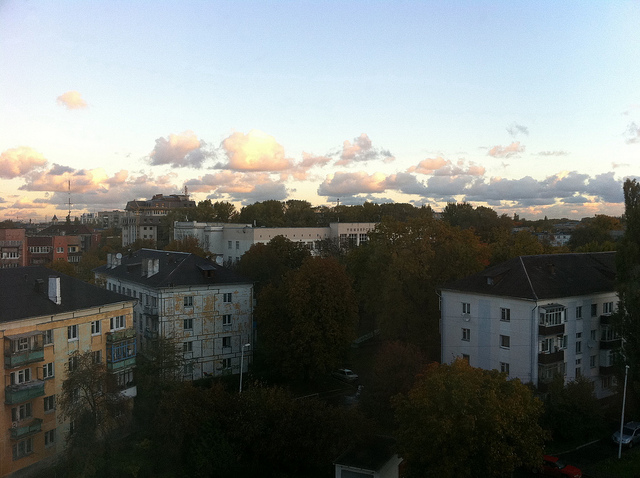
[dropcap4 color="green"]H[/dropcap4]ello from the city of Kaliningrad, located within the small part of Russia that sits on the Baltic Sea. I’m here for the Marine Mammals of the Holarctic meeting, presenting a paper on the long term trends in sea ice in the breeding regions of harp seals. The talk went well, and it was a great opportunity to get back in touch with colleagues from both Russia and the US. Especially great to see Erin Moreland there, and hear her talk on unmanned aerial survey systems!

[gmap height="200" width="200" latitude="54.73" longitude="20.51" zoom="3" maptype="G_HYBRID_MAP"]

  • Search

  • Tags

    Alaska Antarctica Arctic Cachalot Citizen Science Climate Variability Fin whales Gray seals harp seals Huh? Humpback whales Ice Long Eddy News Oceanography Spinner dolphins Teaching
    • The Johnston Lab

      • 135 Duke Marine Lab Rd., Beaufort, NC
      • david.johnston@duke.edu
      • 252 504 7593
      • 252 646 1007
      • 252 504 7648
    • Get Connected

      emailfacebooktwitter
    • Search

    • Recent Musings

      • Humpback whale research in Southeast Alaska
      • The Mega MOOC: Taking Marine Megafauna online in Spring 2014!
      • Marine Conservation Service Learning Students = Awesome Authors on the iTunes Store
      • “Holy Humpback” of a Day!
      • Bronx, the Cape Cod seal, and his spatial habits: a 5-month checkup
      • Spinner article in Natural History magazine!
      • Palmer Long-term Ecological Research Program: Rise of the Megafauna
    • RSS Digital Sea Monsters

      • Cachalot 1.1 is available!
      • Cachalot is Live!
      • Great News!
    • Cachalot iPad App

      Cachalot on iTunes

    • Twitter Feed

      Follow @dioptrica

    • Our Group:

      MCE@D


      DUML

    • About
    • Location
    • Research
    • Teaching
    • Tech
    Copyright © 2013 Johnston Lab. All Rights Reserved