
 I am appointed as an Associate Professor of the Practice of Marine Conservation & Ecology at the Duke University Marine Laboratory in the Marine Science and Conservation Division of the Nicholas School of the Environment. In this capacity I am also the Director of the Duke Marine Lab Unoccupied Systems Facility. I hold adjunct appointments at Murdoch University in Western Australia and in the Department of Biology and Marine Biology at the University of North Carolina, Wilmington.
I received a BSc in marine biology from the University of Guelph, Canada and an MSc in Zoology from same institution. I then worked as a marine ecologist in the Non-Profit sector for 5 years before commencing my PhD program in the Nicholas School of the Environment at Duke University in 2000. After graduating from Duke in 2004, I pursued Post-Doctoral training at the Monterey Bay Aquarium Research Institute (MBARI). I was hired in 2005 to lead the newly formed cetacean research unit at the Pacific Islands Fisheries Science Center in Honolulu HI. I returned to Duke in 2008 to work collaboratively with other scientists in the Marine Conservation Ecology group at the Duke Marine Lab. (Duke faculty website)
I am a broadly skilled biological oceanographer and marine conservation biologist. My research focuses on the foraging ecology and habitat needs of marine animals in relation to pressing conservation issues. I have active projects in the following areas: population assessments and foraging ecology of marine vertebrates, the design and utility of marine protected areas; the effects of climate variability and global change on marine animals and the sustainability of incidental mortality and directed harvests of marine animals. I am also involved in projects addressing the effects of anthropogenic sound on marine mammals and the suitable application of new technological approaches to marine ecology and conservation. I have experience working in a variety of marine ecosystems – from the highly productive waters of the California Current and Bay of Fundy, to the oligotrophic waters of the central Pacific. You can download my CV here:Johnston_CV_2013_QR
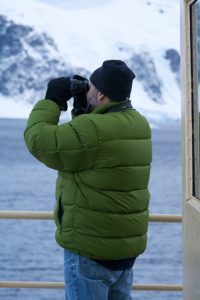 I am also a skilled educator at both the undergraduate and graduate levels, and have considerable experience in both large and small classrooms, as well as in field-based learning situations. My objective as a university educator is to teach aspects of marine biology, ecology and conservation in an integrative manner – I do this by employing a diverse array of tools, techniques and case studies to help students learn both basic and advanced ecological principles in relation to current conservation issues.
I believe that integrative teaching involves incorporating techniques and disciplines that are most often found employed separately. For example, we can draw from the usually disparate fields of philosophy, oceanography and ecological theory to better assess and explain relationships amongst plants, animals (including humans) and the physical environment. I am well prepared for integrative teaching – my scientific approach often incorporates a variety of techniques to answer broad ecological questions about population dynamics, foraging behavior and habitat use. In this context, I often employ examples relating to marine megafauna – large invertebrates, pelagic fishes, seabirds, turtles and marine mammals. These compelling species act as natural hooks to gain the interest and maintain the attention of students, helping them learn and retain key concepts. Furthermore, I wholeheartedly embrace experiental learning opportunities – it has been my experience that students learn best by doing, and especially so in compelling settings.
 As an educator, I’m amazed at how well (and frequently) students use their mobile devices (smartphones, tablets etc) to communicate and learn. This represents a significant opportunity for teachers – these devices can be tapped to provide content to students wherever and whenever the time is right and can facilitate learning in the classroom in more structured settings. To this end, I’ve started a collaborative project that is focusing on bringing the content of one of our courses into a mobile format. In particular, the project has developed an application for Apple’s iPad – Cachalot – that allow students to interact with all of the course content on their hand-held device. You can learn more about it on the Digital Seamonsters website.
Publications
Heenehan, H. L., J. Tyne, L. Bejder, S.M. Van Paris, D. W. Johnston. 2016. Passive acoustic monitoring of coastally-associated Hawaiian spinner dolphins, Stenella longirostris, ground-truthed through visual surveys. The Journal of the Acoustical Society of America
Puryear, W., M. Keogh, N. Hill, J. Moxley, E. Josephson, K. R. Davis, C. Bandoro, D. Lidgard, A. Bogomolni, M. Levin, S. Lang, M. Hammill, D. Bowen, D. W. Johnston, T. Romano, G. Waring and J. Runstadler. 2016. Prevalence of Influenza A virus in live-captured North Atlantic gray seals: a possible wild reservoir. Emerging Microbes & Infections
Friedlaender, A., D. W. Johnston, R. Tyson, Reny, A. Kaltenberg, J. Goldbogen, A. Stimpert, E. Hazen, P. Halpin, A. Read, D. Nowacek. 2016. Two-step decisions in a central-place forager. Royal Society Open Science.
Bejder, M., D. W. Johnston, J. Smith, A. S. Friedlaender and L. Bejder. 2016. Embracing conservation success of recovering humpback whale populations: evaluating the case for downlisting their conservation status in Australia. Marine Policy. 66:137–141
Johnston, D. W., J. Frungillo, A. Smith K. Moore B. Sharp J. Schuh and A. J. Read. 2015. Trends in stranding and by-catch rates of gray and harbor seals along the northeastern coast of the United States: evidence of divergence in the abundance of two sympatric phocid species? PLOS ONE
Tyne, J., D. W. Johnston, R. Rankin, N. Lonergan and L. Bejder. 2015. The importance of spinner dolphin (Stenella longirostris) resting habitat: Implications for management. Journal of Applied Ecology 52(3): 621–630
Curtice, C. D. W. Johnston, H. Ducklow, N. Gales, P. N. Halpin and A. S. Friedlaender. 2015. Spatial and temporal dynamics in the foraging movements of humpback whales (Megaptera novaeangliae) in the Western Antarctic Peninsula. Movement Ecology. 3 (1):13
Roman, J.. M. Dunphy-Daly, D. W.. Johnston, and A. J. Read. 2015. Lifting baselines to address the consequences of conservation success. Trends in Ecology and Evolution 30(6): 299–302
Heenehan, H., X. Basurto, L. Bejder, J. Tyne, and D. W. Johnston. 2015. Using Ostrom’s common pool resource theory to build towards an integrated ecosystem based sustainable cetacean tourism system in Hawai`i. Journal of Sustainable Tourism 23(4):536–556
Kraska J, G. O. Crespo and D. W. Johnston 2015. Bio-logging of marine migratory species in the law of the sea. Marine Policy 51:394–400.
Friedlaender, A. S., J. A. Goldbogen, D. P. Nowacek, A. J. Read, D. W. Johnston and N. Gales. 2014. Feeding rates and under-ice foraging strategies of the smallest lunge filter feeder, the Antarctic minke whale (Balaenoptera bonaerensis). Journal of Experimental Biology. 217: 2851-2854
Tyne J. A., K. H. Pollock, D. W. Johnston and L. Bejder. 2014. Abundance and Survival Rates of the Hawai’i Island Associated Spinner Dolphin (Stenella longirostris) Stock. PLoS One 9:e86132. doi:10.1371/journal.pone.0086132
Johnson, Z. I. and D. W. Johnston. 2013. Smartphones: Powerful Tools for Geoscience Education. Eos, Transactions American Geophysical Union. 94(47): 433
Siders, Z. A., A. J. Westgate, D. W. Johnston, L. D. Murison and H. N. Koopman. 2013. Seasonal variation in the spatial distribution of basking sharks (Cetorhinus maximus) in the Bay of Fundy, Canada. PLOS ONE 8(12): e82074. doi:10.1371/journal.pone.0082074
Crain, D.D., A. S. Friedlaender, D. W. Johnston, D. P. Nowacek, B. Roberts, K. W. Urian, D. M. Waples & A. J. Read. 2013. A quantitative analysis of the response of short-finned pilot whales, Globicephala macrorhynchus, to biopsy sampling. Marine Mammal Science. 30(2): 1748-7692
Soulen, B. K. K. Cammen, T. F. Schultz and D. W. Johnston. 2013. Factors affecting stranded harp seals (Pagophilus groenlandicus) in the Northwest Atlantic. PLOS ONE. 8(7): e68779
Thorne, L. H., D. W. Johnston, D. L. Urban, J. Tyne, L. Bejder, R. W. Baird, S. Yin, S. H. Rickards, M. H. Deakos, J. R. Mobley, Jr., A. A. Pack, M. Chapla Hill. 2012. Predictive modeling of spinner dolphin (Stenella longirostris) resting habitat in the main Hawaiian Islands. PLOS ONE 7(8): e43167. doi:10.1371/journal.pone.0043167
Johnston, D. W., A. S. Friedlaender, A. J. Read and D. P. Nowacek. 2012. Initial density estimates of humpback whales (Megaptera novaeangliae) in the inshore waters of the Western Antarctic Peninsula during the late autumn. Endangered Species Research. 18:63–71
Johnston, D. W., A. S. Friedlaender, M. Bowers and D. M. Lavigne. 2012. The effects of climate change on harp seals (Pagophilus groenlandicus). PLOS ONE. 7 (1) p. e29158 EP – doi:10.1371/journal.pone.0029158
Nowacek, D.P., A.S. Friedlaender, P.N. Halpin, E.L. Hazen, D.W. Johnston, A.J. Read, B. Espinasse, M. Zhou, and Y. Zhu. 2011. Super-aggregations of krill and humpback whales in Wilhelmina Bay, Antarctic Peninsula. PLoS ONE. 6(4): e19173
Forney, K. A., D .R. Kobayashi, D. W. Johnston, J. Marchetti, and M. M. Marsik. 2011. What’s the catch? Patterns of cetacean bycatch and depredation in Hawaii-based pelagic longline fisheries. Marine Ecology. 32(3): 380–391
Friedlaender, A. S., D. W. Johnston, W. R. Fraser, J. Burns, P. N. Halpin, D. P. Costa. 2011. Ecological niche modeling of sympatric krill predators around Marguerite Bay, Western Antarctic Peninsula. Deep Sea Research II: Topical Studies in Oceanography. 58: 1729-1740
Hazen, E. L. and D. W. Johnston. 2010. Meridional complexity in the deep scattering layers and top predator distribution in the Central Equatorial Pacific. Fisheries Oceanography. 19(6), 427–43
Friedlaender, A. S., D. W. Johnston and P. N. Halpin. 2010. Effects of the North Atlantic Oscillation on sea ice breeding habitats of harp seals (Pagophilus groenlandicus) across the North Atlantic. Progress in Oceanography – Climate Impacts on Oceanic Top Predators (CLIOTOP). 86(1): 261-26
Friedlaender, A. S., D. P. Nowacek, D. W. Johnston, A. J. Read, R. B. Tyson, L. E. Peavey, and E. M. Revelli. 2010. Multiple sightings of large groups of Arnoux’s beaked whales (Berardius arnouxii) in the Gerlache Strait, Antarctica. Marine Mammal Science. 26(1): 246-25
Leaper, R. , D. M. Lavigne, P. J. Corkeron and D. W. Johnston. 2010. Towards a precautionary approach to managing Canada’s commercial harp seal hunt. ICES Journal of Marine Science. 67: 316-3
Gales, N., D. Bowen, D. W. Johnston, K. Kovacs, C. Littnan, W. Perrin, J. Reynolds and P. Thompson. 2009. Guidelines for the Treatment of Marine Mammals in Field Research. Marine Mammal Science. 25 (3): 725-73
McDonald, M. A., J. A. Hildebrand, S. M. Wiggens, D. W. Johnston and J. J. Polovina. 2009. An acoustic survey of beaked whales at Cross Seamount near Hawaii. Journal of the Acoustical Society of America. 125 (2): 624-627.
Johnston, D. W., J. Robbins, M. E. Chapla, D. K. Mattila and K. R. Andrews. 2008. Diversity, habitat associations and stock structure of odontocete cetaceans in the waters of American Samoa, 2003-2006. Journal of Cetacean Research and Management. 10: 59-6
Johnston, D. W., M. A. McDonald, J. J. Polovina R. Domokos, S. Wiggens and J. A. Hildebrand. 2008. Temporal patterns in the acoustic signals of beaked whales at Cross Seamount. Biology Letters. 4: 208-211.
Johnston, D. W., M. E. Chapla, L. E. Williams and D. K. Mattila. 2007. Identification of humpback whale wintering habitat in the Northwestern Hawaiian Islands using spatial habitat modeling. Endangered Species Research. 3: 249-25
Johnston, D. W. and A.J. Read. 2007. Flow-field observations of a tidally driven island wake used by marine mammals in the Bay of Fundy, Canada. Fisheries Oceanography. 16:422-435.
Johnston, D. W. 2013. Vigilance, Resilience and failures of Science and Management: Spinner dolphins and tourism in Hawaii. Chapter 20 In Higham, Bejder and Williams [Eds]. Whaling-watching, sustainable tourism and ecological management.
Johnston, D. W. 2012. Re-Imagining the Marine Science Textbook: Cachalot | Mobile Marine Megafauna. Duke Environment Magazine. Spring 2012.
Gales, N. N., D. W. Johnston, C. L. Littnan and I. Boyd. 2010. Ethics in Marine Mammal Research. Chapter 1 In (I. Boyd, D. Bowen and S. Iverson, [eds.]. Marine Mammal Ecology and Conservation: A Handbook of Techniques. Oxford University Press, Oxford U.K.
Carretta,J. V., K. A. Forney, M. S. Lowry, J. Barlow, J. D. Baker, D. W. Johnston, B. Hanson, R. L. Brownell Jr., J. Robbins, D. K. Mattila, K. Ralls, M. M. Muto, D. Lynch, and L. Carswell. 2010. Pacific Marine Mammal Stock Assessments: 2009. NOAA-TM-NMFS-SWFSC-453. U. S. DEPARTMENT OF COMMERCE. National Oceanic and Atmospheric Administration. National Marine Fisheries Service. Southwest Fisheries Science Center. 336pp.
Carretta, J. V. , K. A. Forney, M. S. Lowry, J. Barlow, J. D. Baker, D. W. Johnston, B. Hanson, M. M. Muto, D. Lynch, and L. Carswell. 2009. Pacific Marine Mammal Stock Assessments: 2008. NOAA-TM-NMFS-SWFSC-434. U. S. DEPARTMENT OF COMMERCE. National Oceanic and Atmospheric Administration. National Marine Fisheries Service. Southwest Fisheries Science Center. 317p
Chapla, M. E., D. W. Johnston and K. Urian. 2007. Pacific Islands Photo-Identification Network Workshop Report. Pacific Islands Fisheries Science Center Administrative Report. H-07-02, 28p
Johnston, D. W. 2006. A hard days night: Spinner dolphins need their rest too. Ka Pili Kai. 28: 9-1
Reeves, R. R., A. J. Read and D. W. Johnston. 2006. Report: Workshop on Research Needs for the Conservation and Management of Cetaceans in the Pacific Islands Region. Pacific Islands Fisheries Science Center, PIFSC Special Publication, SP-06-00
Hannah, J. and D. W. Johnston. 2004. Whales of Atlantic Canada and the Northeastern United States. A Field Guide. International Marine Mammal Association Inc. Guelph, ON. 72p
Wells, P.G., P.D. Keizer, J. L. Martin, P. A. Yeats, K. M. Ellis and D. W. Johnston. 1996. The chemical environment in the Bay of Fundy. Pages 37-56 In J.A. Percy, P.G. Wells and A.J. Evans [eds.]. Bay of Fundy Issues: A scientific overview. Environment Canada – Atlantic Region Occasional Report No. 8.
When my seals call home, they rely on America’s most available network. RTP 180o. Research Triangle Park. June 2013.
Novel Approaches to Marine Science Education and Outreach. A conversation about Digital Publishing and Smartphone-based Citizen Science. Hatfield Marine Science Center, Oregon State University. April 2013
Seals and Spinners – Specialized Behaviors and Spatial Ecology. Understanding the habitat needs of marine mammals in relation to pressing conservation issues. Hatfield Marine Science Center, Oregon State University. April 2013
The iPad as a Digital Teaching Tool: Apps, Textbooks and best practices for using mobile devices in the class, lab and field. Board of Visitors Retreat. Nicholas School of Environment, Duke University. April 2013.
High-Latitude Marine Megavertebrates and Climate Change: Innovative Approaches to Conservation Challenges and Educational Opportunities. Center for Ocean Solutions, Stanford University. October 2012.
Presenting Ocean Mapping and Citizen Science – Water Theme. Duke Forward Fundraising Campaign Launch. Duke University. September 2012.
Developing ecological niche models for marine vertebrate conservation: Climate change in the Western Antarctic Peninsula and dolphin-based tourism in Hawaii. Spring Invitational Seminar Series. School of Marine Science and Policy. University of Delaware. April 2012.
Smartphones and Marine Mammal Conservation: Citizen Science in the Age of the “Tricorder.” Murdoch University Public Lecture Series. Murdoch University. February 2012.
Developing the Scalable Open-Access Digital Textbook for Marine Science: Enhancing Science, Technology, Engineering and Math (STEM) teaching through the integration of transformational philosophy, pedagogy and technology. Murdoch University. Exploring, Discovering and Transforming’ Research Group Seminar Series. Murdoch University. February 2012.
On thin ice: Climate change and high-latitude marine vertebrates. Let’s Talk CO2: Learning, Sharing and Actiing On Climate Change. Pine Knolls Aquarium Workshop on Climate Change. November 2011.
New publishing/New pedagogies: How online media and mobile devices are changing the way we think about publishing, teaching, and community engagement. Duke Center for Instructional Technology Seminar Series. Duke University. October 2011.
https://youtu.be/K8HOAylpHh8
http://youtu.be/gi3wUjHW9J4